
7 Bookshelf Decorating Ideas I’m Obsessed With
 Reading Time: 9 minutes
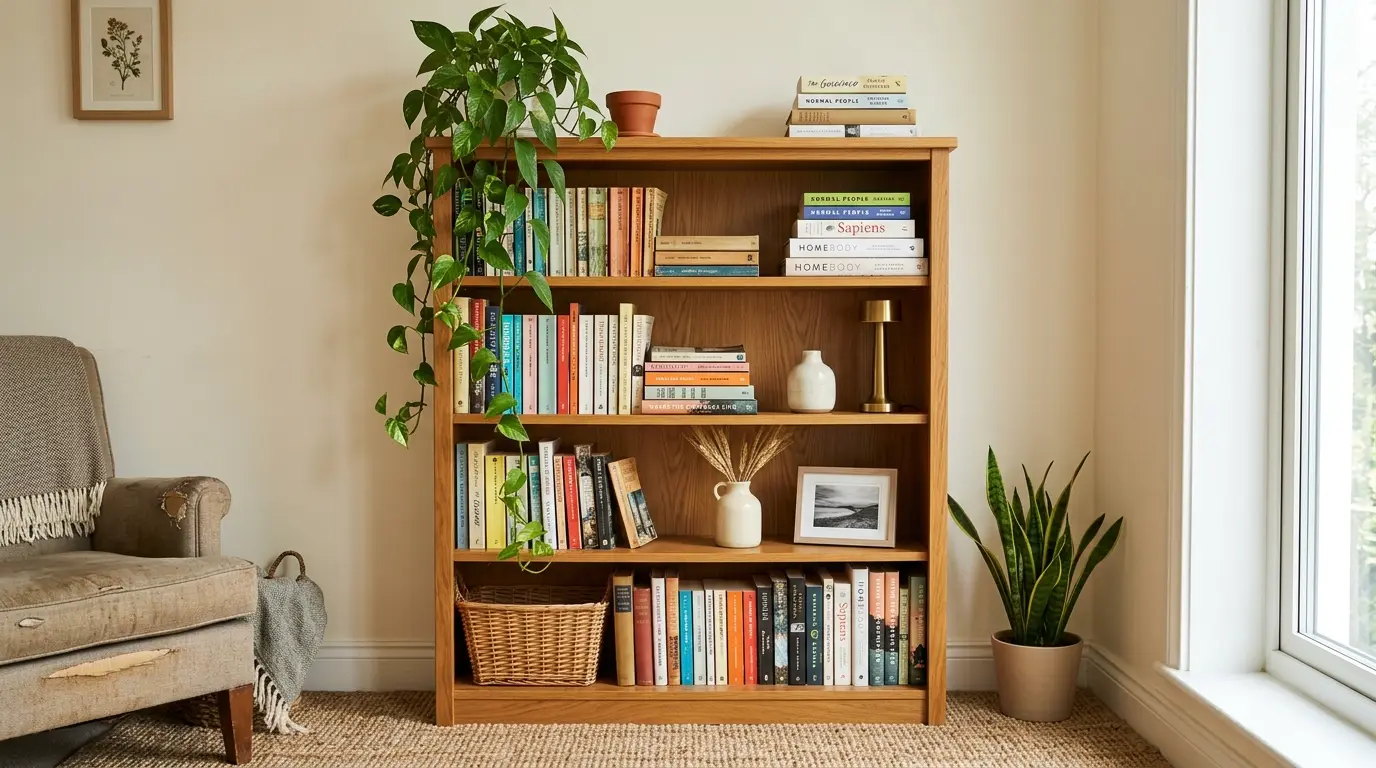
 TL;DR: The easiest way to style a bookcase is the 2/3 rule: fill about two-thirds of each shelf with a mix of books and decorative objects — trailing plants, framed art, ceramic bowls — and leave the remaining third as empty negative space. Keep heavier items on the bottom shelf to anchor the unit and prevent a cluttered look.
When I first moved into my 750-square-foot flat (apartment), finding affordable bookshelf decorating ideas that actually worked was my biggest struggle. I bought a cheap flat-pack bookcase from Target and immediately shoved every paperback I owned onto it. The result looked like a messy thrift store bin. Since I rent and can’t use a drill to mount heavy floating shelves, I had to figure out how to make a basic freestanding unit look high-end.
I spent weeks moving things around and making plenty of mistakes (like buying heavy bookends that completely warped a cheap shelf). I finally found a few formulas that actually work for real homes and real budgets. If you are browsing for 2025 and 2026 home trends, you will notice a huge shift toward “bookshelf wealth”—a collected, cozy look that celebrates displaying your favorite things.
Here are my favorite ways to decorate your shelves so they look perfectly pulled together.
1. How do I arrange books on a bookshelf without it looking messy?
To arrange books without creating visual clutter, group them by height and alternate between vertical rows and horizontal stacks. This breaks up the monotonous straight lines and gives you a stable base to display smaller trinkets on top.
When I tried lining up all my novels in a straight row, my family room felt like a public library. The easiest way to fix this is to turn some of those books on their side. I usually stack three to four books horizontally, placing the largest on the bottom and the smallest on top.
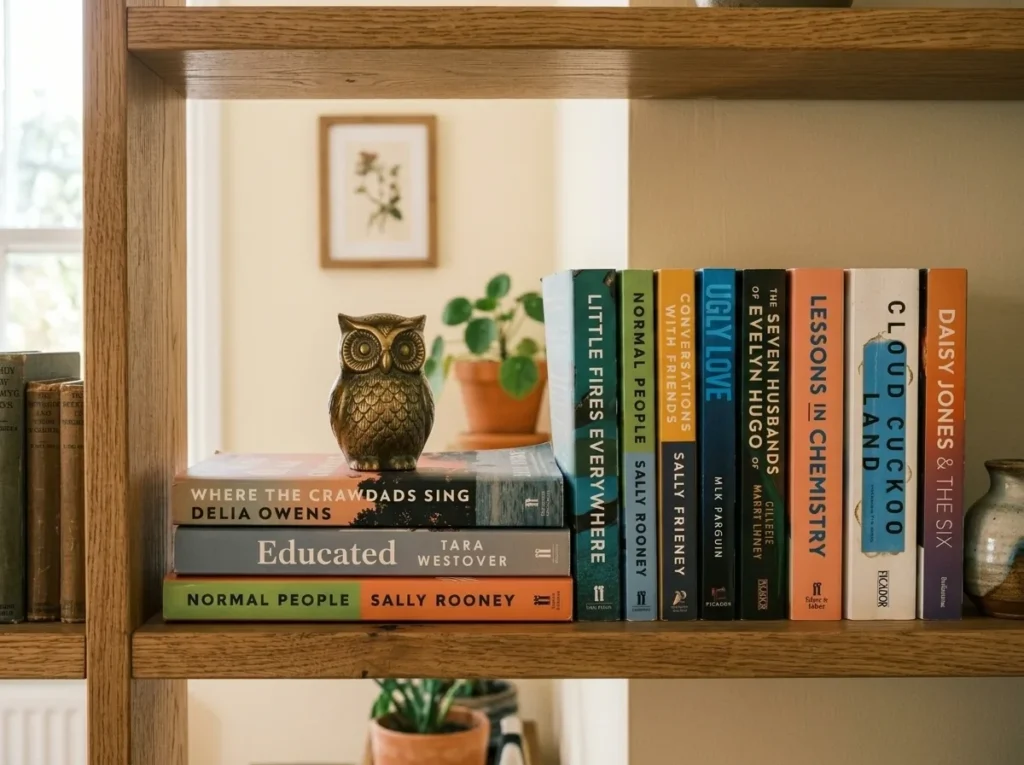
Here’s the thing: those horizontal stacks become the perfect little pedestals for a decorative object. I love placing a small brass owl figurine I found at an antique store right on top of my favorite design books. According to the designers at Emily Henderson Design, alternating book orientations gives the eye a place to rest.
My biggest tip that you won’t see on most styling blogs? Push your books back about 2.5cm (1 inch) from the front edge of the shelf. Having them perfectly flush with the edge actually makes the unit look rigid and cheap, while a slight setback creates nice shadows and depth.
2. What should I put on the bottom shelf?
The bottom shelf should always hold your heaviest, bulkiest items like large woven baskets, wooden boxes, or thick encyclopedias. This anchors the room visually and provides hidden storage for unsightly items like cords or paperwork.
Before I figured this out, my living room bookshelf felt incredibly top-heavy and constantly looked like it was going to tip over. Visual weight matters just as much as physical weight. When you place small, delicate items near the floor, they get lost in the shadows.
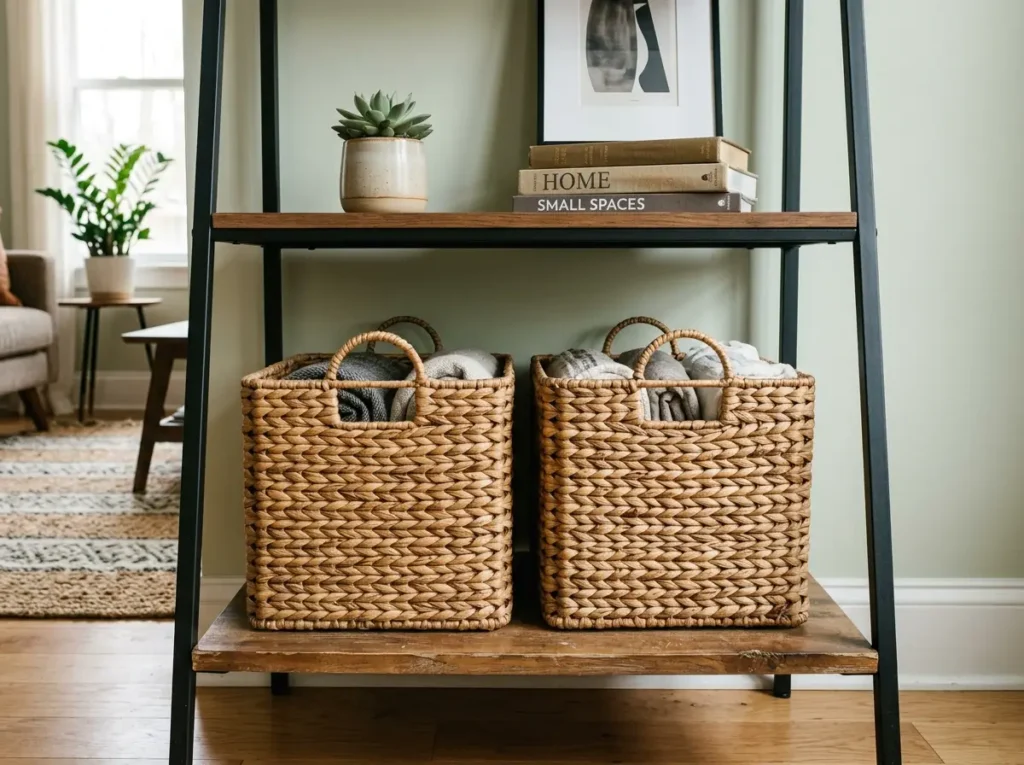
I bought two large rattan baskets from Wayfair for about $35 each and slid them right onto the lowest tier. Not only do they ground the whole design, but they also hide my dog’s chew toys and my spare throw blanket. If you have open storage in your home office, using boxes on the bottom is a lifesaver for hiding tax documents. I share more of these in my storage solutions guides if hiding clutter is your goal.
If you don’t want to buy baskets, use your heaviest coffee table books or vintage art books here. Stacking them horizontally on the bottom shelf creates a sturdy foundation for the rest of your decor.
3. Where is the best place to add art on a bookcase?
The best way to add art to your bookcase is to lean small framed prints against the back wall of the shelf, slightly tucked behind a stack of books or a vase. This creates depth and makes the unit feel like a built-in piece rather than basic storage.
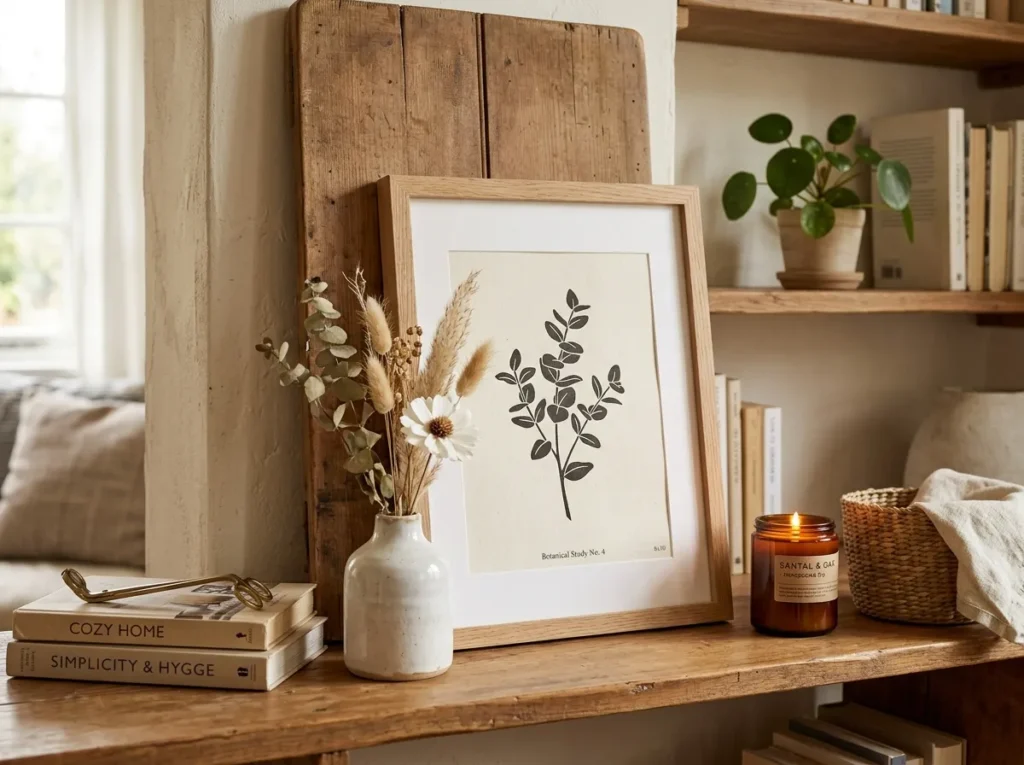
I used to think art only belonged on walls. But when you lean a small frame at the back of a shelf, it instantly draws the eye inward. It makes flat, boring shelves look deep and custom-made.
I tried this in my own apartment using a cheap 20x25cm (8×10 inch) picture frame from Target. I filled it with a printable landscape I bought on Etsy for $5. I leaned it against the back board, then placed a short ceramic vase slightly in front of it to overlap the edges. Layering items like this is the secret to getting a designer look on a budget. As Driven by Decor points out, mixing heights and overlapping frames creates immediate visual interest.
Make sure you use a frame with a stand or add a bit of peel-and-stick putty to the bottom corner so it does not slide down.
4. How do I incorporate plants without ruining my books?
To safely add greenery to your shelves, use high-quality faux plants or place real succulents in deep, sealed cachepots so water never leaks onto your pages. Place trailing plants on the top shelf to draw the eye upward and add organic movement.
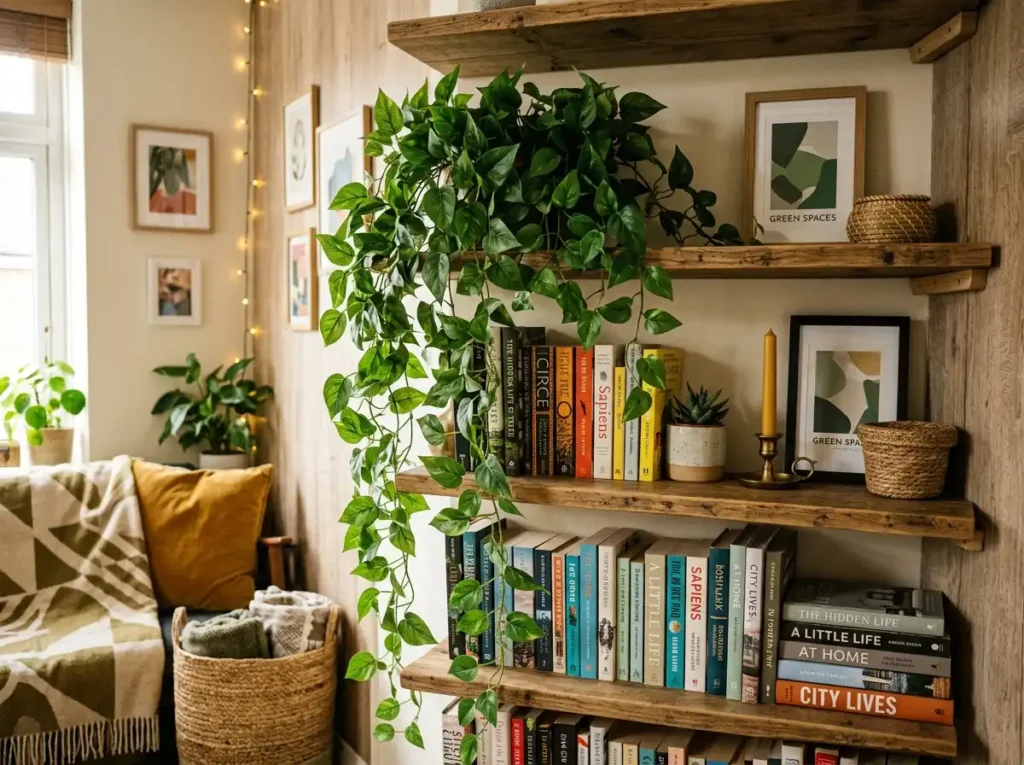
I learned this lesson the hard way. I once put a real fern in a cheap terracotta pot right next to my favorite hardcover novels. Water seeped right through the porous clay and ruined three book covers.
Now, I stick to faux trailing plants for the highest spots, or I use fully glazed, waterproof planters with no drainage holes (and keep the plant inside its plastic nursery pot). A faux pothos draped over the edge of the top shelf breaks up all the hard angles of the bookcase.
- Use a faux string of pearls for a delicate, minimalist look.
- Try a snake plant in a bright ceramic bowl for a pop of color.
- Place a small, real succulent next to your bookends where it is easy to reach for occasional watering.
If you want to try live plants, the editors at Good Housekeeping recommend sticking to low-maintenance varieties that thrive in indirect light.
5. What kind of small decorative objects work best?
The best small decorative objects for shelves are sculptural pieces that contrast with the square shape of books, like round brass bowls, curved pottery, wooden knots, or interesting candlesticks. Choose items with varied textures like metal, wood, and ceramic.
If everything on your shelf is a flat rectangle, the whole unit will feel stiff. You need round, curvy shapes to soften the look. I love hunting for these pieces at thrift stores. My favorite find is a $4 brass bowl that I use to hold matches next to my candles.
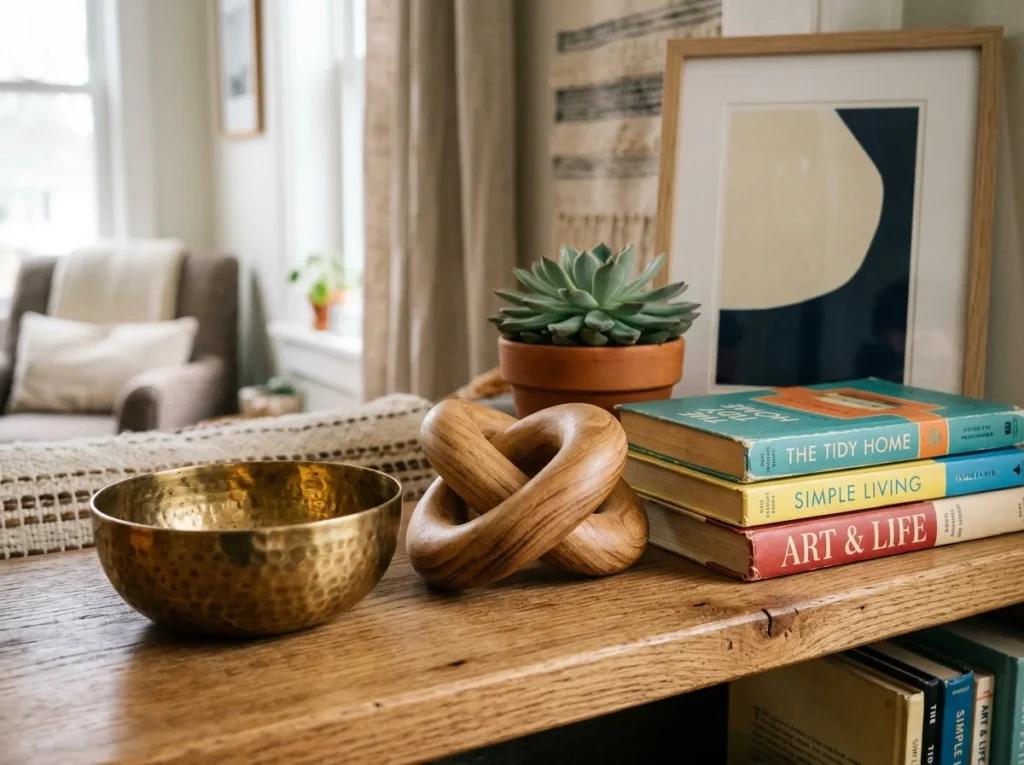
The trick is to use the 2/3 rule I mentioned earlier. Once your books are in place, fill the negative space with a wooden knot, a chunky candlestick, or a piece of unique pottery. I try to make sure no two adjacent shelves have the exact same material. If I have a wooden box on one shelf, I will use a metal or ceramic object on the one directly above or below it.
If you need ideas for finding affordable pieces, check out our guide to upcycling thrift store decor.
6. How much blank space should I leave on my shelves?
You should leave about 30 percent of your shelf space completely empty to give the eye a place to rest and prevent the bookcase from looking cluttered. This negative space allows your favorite pieces to stand out and act as a true focal point.
When I first started decorating, I felt the need to fill every single inch of bare wood. The result was a chaotic mess. Leaving blank space (also called negative space) is actually a deliberate design choice.
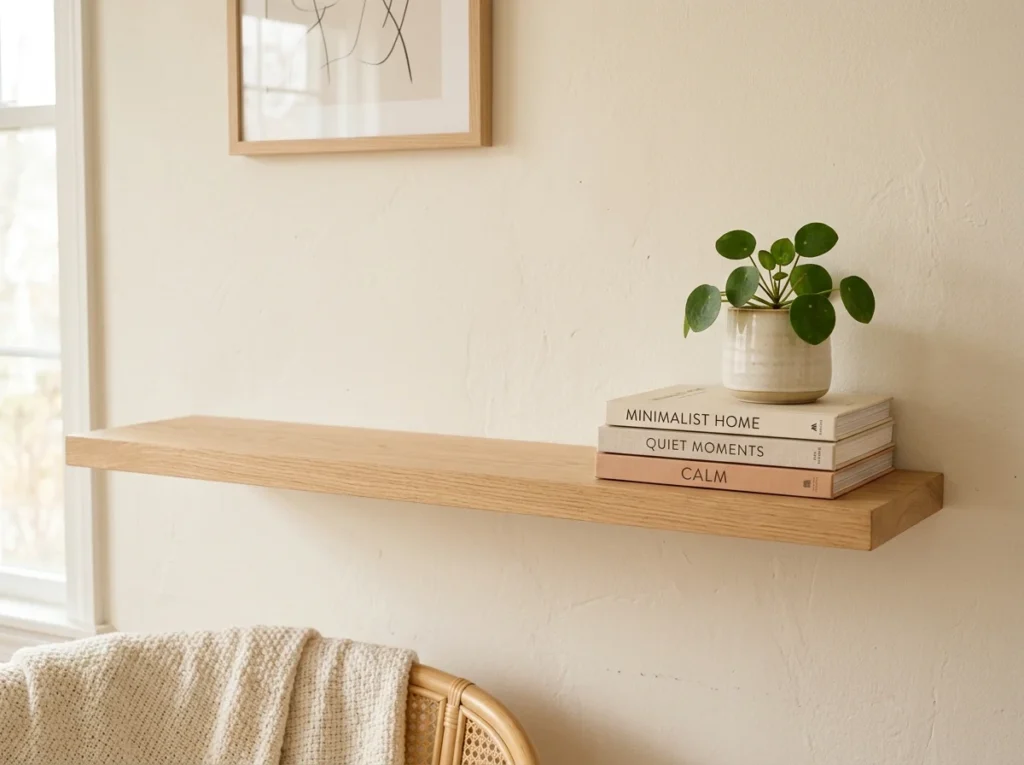
Try this: step back about 3 meters (10 feet) from your bookcase and squint. If it looks like a solid block of color and shapes, you have too much stuff. I usually remove one or two items per shelf until I can clearly see the back panel shining through.
A great non-obvious tip is to leave the outer edges of the middle shelves entirely bare. It draws focus directly to the center vignette and makes the whole room feel lighter.
7. How do I make my bookshelf look cohesive?
To make your bookshelf look cohesive, stick to a tight color palette of three to four main colors, and distribute them evenly across the shelves in a zig-zag pattern so one side doesn’t feel visually heavier than the other.
Color is the secret glue that holds shelf styling together. In my living room, my color palette is mostly cream, brass, and deep green. When I am placing items on my bookcase, I make sure the green items are not all clustered on the left side.
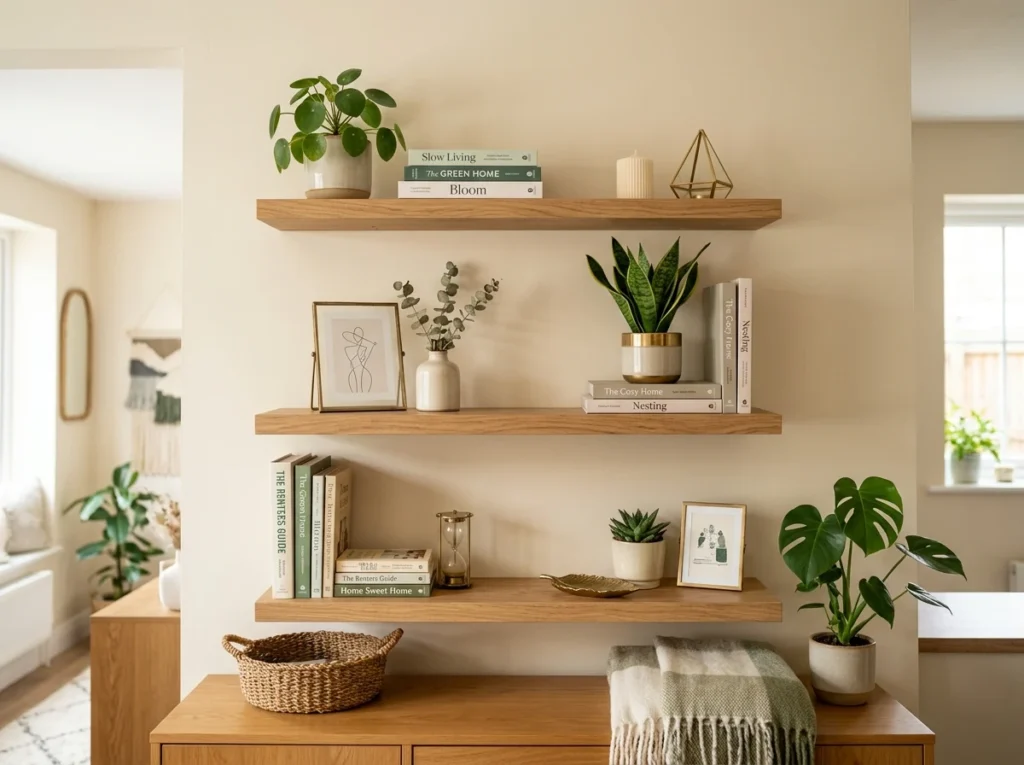
If I put a green plant on the top left, I will place a green book on the middle right, and maybe a green box on the bottom left. This creates a triangle shape that forces your eye to bounce around the entire display.
If you have books with brightly colored, distracting spines that ruin your neutral vibe, just turn the pages outward. It is a controversial move, but I love the creamy, uniform look it provides. For more on creating a tight color scheme, read our guide to choosing a palette for a small apartment.
Frequently Asked Questions
What can I decorate my bookshelf with?
You can decorate your bookshelf with a mix of hardcover books, small framed artwork, trailing house plants, and sculptural objects like ceramic vases, brass bookends, and wooden bowls. Mixing these varied textures and shapes breaks up the straight lines of the books and adds personality to your space.
How do you decorate a bookshelf without it looking cluttered?
To prevent clutter, use the 2/3 rule by filling only two-thirds of your shelf space with books and decor, leaving the rest completely empty as negative space. Hide unsightly items in large woven baskets on the bottom shelf, and stick to a cohesive color palette so the display looks intentional.
Should I turn my books backwards on a bookshelf?
Turning books so the pages face outward is an optional trick for a calm, uniform, neutral look when colorful spines clash with your palette. It is a divisive choice, so use it only on the shelves where you want a soft, monochrome effect rather than across the whole bookcase.
Riley’s Final Word
Decorating a bookcase doesn’t have to be intimidating, and you definitely don’t need a huge budget to make it look great. Start by shopping your own home for books and bowls you already love, and remember to leave plenty of blank space to let those pieces shine. If you stick to the 2/3 rule and keep your heaviest items on the bottom, you’ll have a beautifully styled focal point in an afternoon. I can’t wait to see how you style your own shelves!
Sources
- Good Housekeeping: 22 Chic Bookshelf Decorating Ideas
- Driven by Decor: How to Decorate a Bookshelf: 10 Simple Formulas That Work!
- Emily Henderson Design: Make Your Shelves Look Better With These 4 Easy Bookshelf Styling Formulas
